


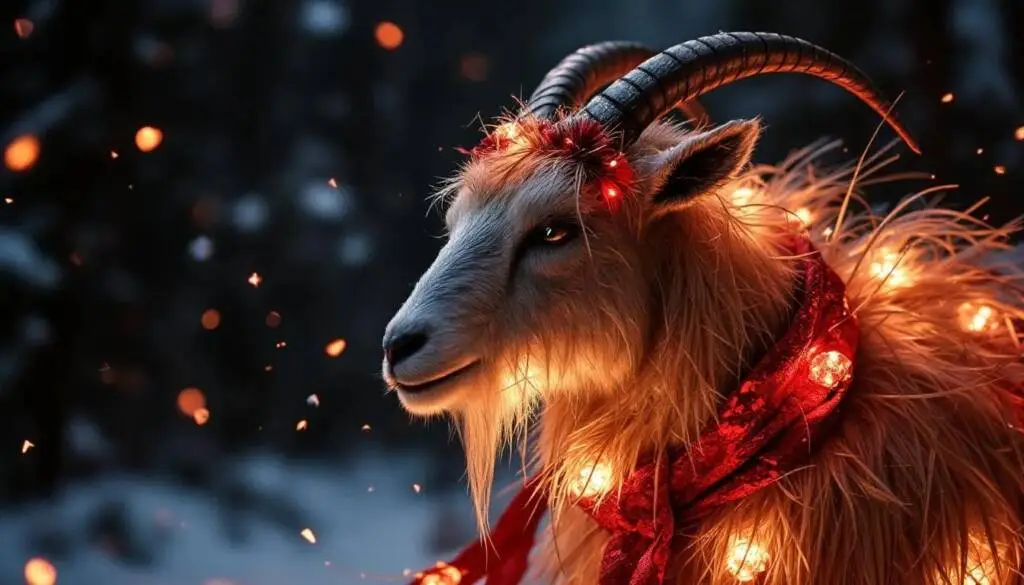
The Christmas Goat: The Yule Goat Tradition in Sweden and other Scandinavian countries.
In Sweden and other Scandinavian countries, the Yule Goat, or Julbock, stands as a cherished figure in Christmas festivities. Traditionally made of straw, the Yule Goat is emblematic of ancient pagan rituals, symbolizing both fertility and rebirth. Its presence in contemporary celebrations weaves a rich narrative blending old customs with modern holiday cheer.
Historical Significance
The origins of the Yule Goat can be traced back to pre-Christian pagan beliefs. Ancient Northern European communities revered goats as symbols of fertility, associated with the winter solstice celebrations. As the tales evolved, these goats became intertwined with Yule festivities, serving as protective figures against evil spirits during a time when darkness dominated the days. It is said that the Yule Goat would roam the land, ensuring a bountiful new year and safeguarding the harvest.
Folklore and Customs
Over the centuries, the Yule Goat gradually took on a more festive role. In folklore, the goat is often depicted as a gift-bringer, akin to Santa Claus. Families would make straw goats to display in their homes, and children would anticipate the Yule Goat’s arrival, believing it carried gifts and sweets. In some regions, the goat became a central figure in merry gatherings, entertaining guests with lively stories and songs.
Modern Celebrations
Today, the Yule Goat enjoys a revival as part of Christmas. In Sweden, the city of Gävle has become famous for its gigantic straw Yule Goat, an iconic symbol of the festive season. Each year, locals and tourists alike gather to watch its construction and celebrate its significance. Unfortunately, the Gävle Goat has also gained notoriety for its frequent vandalism, leading to a quirky local tradition of attempting to preserve it throughout the holiday season.
In addition to the Gävle Goat, many families continue to create smaller straw goats for their holiday decor. These goats are often adorned with ribbons, representing a connection to past traditions while embracing the celebratory spirit of modern Christmas festivities.
Conclusion
The Yule Goat remains a fascinating emblem of Christmas in Scandinavian countries. Rooted in ancient beliefs, it embodies the ideals of protection, fertility, and the joy of giving. As families celebrate with the Yule Goat, they connect with their heritage, honoring both the past and present during this festive season. This whimsical figure bridges cultures, serving as a reminder of the rich tapestry of traditions that make Christmas meaningful for many.
Disclaimer:
The information provided in this blog is for informational purposes only and should not be considered professional advice. While we strive to provide accurate and up-to-date information, we make no guarantees about the completeness or reliability of the content. Any actions you take based on the information in this blog are at your own risk. Additionally, this blog may contain affiliate links, and we may earn a commission from purchases made through those links.



4 Comments
newstar
Loved this
Vickie
So glad you enjoyed it. :)
Raymond
So cool to hear about the Yule Goat tradition in Scandinavia!
Vickie
I really appreciate you taking the time to read and leave feedback—thanks!