


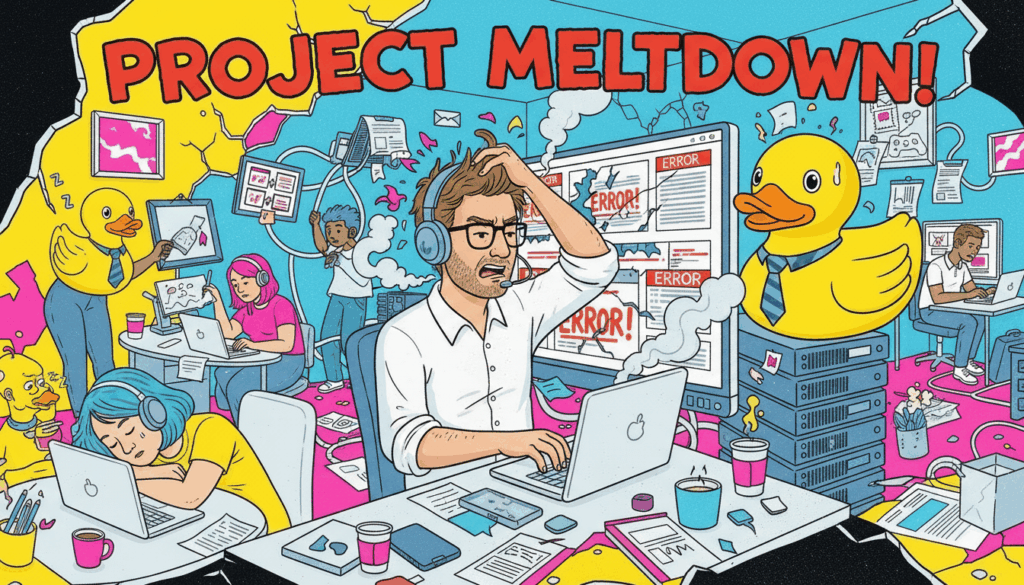
Step 1: Assess the Damage
Begin this step by maintaining composure and conducting an objective assessment of your website’s current status. Utilize a practical checklist to guide this evaluation. For example, verify that the homepage loads correctly, confirm that navigation menus direct users to appropriate pages, test key features such as contact forms and shopping carts, and ensure that all expected pages—including About, Services, and Contact—are accessible. The purpose is to clearly determine whether the site is live or remains in development, and to identify its precise stage within the project timeline. Systematically document any observable issues or progress, such as missing functionalities or completed sections, to establish a factual basis for subsequent decisions.
- Does the website look unprofessional?
Key Questions:
- Are there endless bugs?
- Does the design look outdated?
- Is the timeline unclear or missed?
Step 2: The Heart-to-Heart
Prepare to meet the project manager. Develop balanced feedback by recognizing their contributions, articulating your concerns clearly, and specifying the changes you expect. For example, a sample conversation transcript might include:
Project Manager: ‘Thank you for meeting with me. How are you feeling about the project so far?’
You: ‘I appreciate the effort your team has put into developing the homepage and setting up the core navigation. However, I am concerned about the incomplete shopping cart feature and the inconsistent branding. I would like to see these issues addressed, with a revised project timeline and weekly progress reports. Can we discuss how these changes can be implemented?’
Using a transcript in this way clarifies how to deliver feedback constructively and set measurable expectations.
- Commence by recognizing their efforts so far.
- Then share concerns about the website’s results.
Step 3: Identify New Talent
If the fit is not right, initiate a structured search for a new project manager or team. Establish concrete selection criteria, such as a minimum of 3 years of relevant project management experience, demonstrated quality through a portfolio of successful website launches, and strong communication skills, as evidenced by client testimonials and clear reporting practices.
- Look for Real Reviews: Check several platforms to see if there is an unusual number of negative ratings.
- Carefully review prior projects and assess whether their work meets your standards for quality, style, and technical requirements. For example, request access to sample websites they have developed and evaluate these against your specific criteria, such as responsive design, user-friendly navigation, and adherence to brand guidelines.
Step 4: Draw the Line
If you must terminate, adhere to a clear, professional process that incorporates all relevant legal and human resources (HR) considerations. Consult employment contracts and applicable labor laws to ensure compliance, and coordinate with HR professionals to oversee proper procedures. Ensure all communication is documented, detailed, and respectful throughout to protect the interests of all parties involved.
- Terminating the agreement should be done respectfully. For example: “Thank you for your efforts; we wish you success in future projects.”
Step 5: Find the Right Vibe
Select a team that demonstrates a thorough understanding of your organizational vision and the specific objectives of your website project. In addition to verifying the team’s technical proficiency and established communication protocols, evaluate their ability to align their working style and collaborative approach with your organization’s values and expectations. For example, during interviews, ask a concrete question such as, “Can you describe how you have incorporated stakeholder feedback into your web development process in past projects?” This approach helps gauge whether the team emphasizes transparent communication and iterative feedback. If your organization prioritizes these qualities, ensure the team holds regular progress meetings and actively solicits stakeholder input throughout the development process. This alignment is crucial because it facilitates smoother workflows, stronger partnership dynamics, and ensures that project outcomes reflect both technical excellence and strategic intent. By prioritizing these dimensions of team fit, you increase the likelihood of achieving both immediate project goals and nurturing sustainable, productive professional relationships.
Step 6: Celebrate Your Freedom
Once you’ve hired a new team and your website is back on track, recognize your team’s progress and remain focused on future milestones.
Conclusion
Disclaimer:
The information provided in this blog is for informational purposes only and should not be considered professional advice. While we strive to provide accurate and up-to-date information, we make no guarantees about the completeness or reliability of the content. Any actions you take based on the information in this blog are at your own risk. Additionally, this blog may contain affiliate links, and we may earn a commission from purchases made through those links.




15 Comments
Nora
Sharp piece. Clear, direct, and painfully accurate. The examples of missed deadlines, scope, and communication breakdowns hit home. Useful tips on vetting skills and setting clear milestones would help readers avoid the same mistakes. Practical and eye-opening.
Vickie
Thanks — I appreciate that. Glad the examples resonated; I’ll add clearer vetting tips and milestone templates in an upcoming article.
Jill
Great post, people can learn a lot from this site; it’s very user-friendly and well-organized. The articles are clear and practical, navigation is intuitive, and the visuals make concepts easier to grasp. This site is a great resource for both beginners and experienced users.
Vickie
Thanks — I appreciate the thoughtful feedback. Glad you found the site clear, practical, and user-friendly; that means a lot.
Marcus
Nice article. I hire wrong before.
Vickie
Thanks — I appreciate you reading. Sorry you had that experience.
Alice W.
Nice article. I once hired the wrong PM—missed deadlines, unclear communication, constant scope changes. Learned to check plans, request clear steps, and get deadlines in writing.
Vickie
Thanks — that sounds rough, and I appreciate you sharing.
Gwendolyn
Nice article. I hire wrong project manager for my website before. Many problem: late, confuse talk, scope change all time. I learn lesson. Please check their plan, ask clear steps, and make written deadline.
Vickie
Thanks — that sounds frustrating, but appreciate you sharing. Agreed: vet the PM’s experience, require a clear, itemized plan with milestones and acceptance criteria, set firm written deadlines, and get regular written status reports. If communication slips, escalate quickly or replace the PM early to avoid rework. Glad you were able to learn from it.
Pamela
Nice article, this really hits home. I hired the wrong project manager for our website and it quickly spiraled: missed deadlines, vague communication, scope creep, and a messy handoff that left our developers rebuilding features from scratch. Key takeaway: vet technical experience, insist on clear milestones with deliverables, get weekly written updates, and put acceptance criteria in the contract. Saved us from more delays when we switched to a team that provided a concrete plan, a dedicated PM, and transparent progress tracking.
Vickie
Ouch — that sounds rough, but thanks for sharing your experience and the concrete lessons. Completely agree: vet technical skills, require clear milestones and acceptance criteria, and insist on written weekly updates — those steps save time and money. Glad you found a team that delivered a real plan and transparent tracking.
VI
Great post, I think people should learn a lot from this website its very user pleasant.
Vickie
Thanks — I’m glad you enjoyed it. I aim to make the site user-friendly, so your feedback means a lot.
Jane
You have remarked very interesting points! ps decent web site.