Nostalgia plays a significant role in American Christmas fashion, reflecting changing styles and sentiments over the decades. Here’s a detailed look at the evolution of Christmas fashion in America, showcasing key trends and iconic styles.
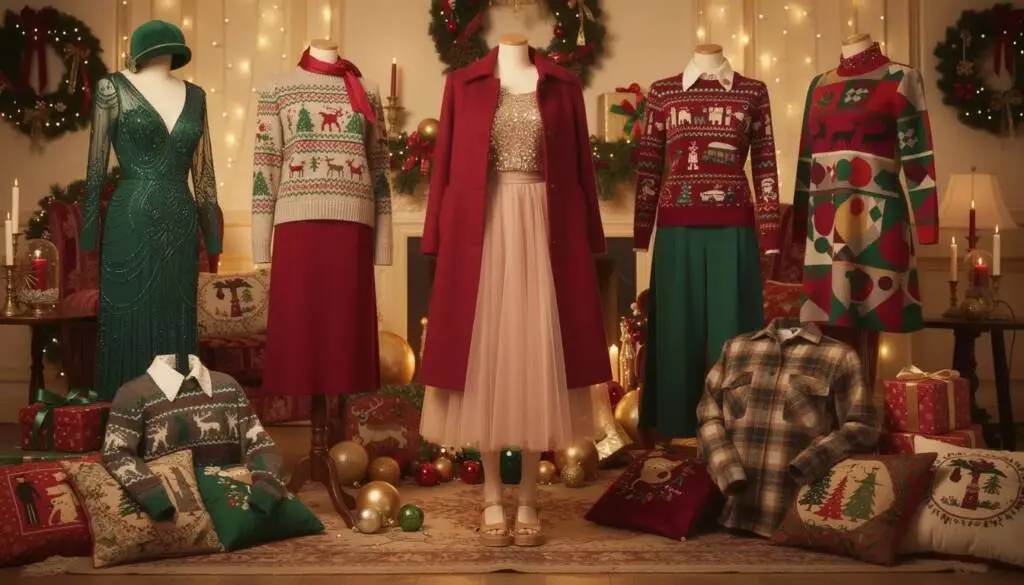
Nostalgia in American Christmas fashion. Showcasing key trends and iconic styles from the 1920s to the 2020s
Key Decades and Fashion Trends
| Decade | Key Trends | Notable Styles | Cultural Influences |
|---|---|---|---|
| 1920s | Flapper dresses and tailored suits | Drop waist dresses, cloche hats | The influence of the Jazz Age and post-war optimism. |
| 1930s | Elegant evening wear and knitwear | Tea-length dresses, cozy knitted sweaters | The Great Depression led to thrift-inspired styles. |
| 1940s | Utilitarian fabrics and patriotic colors | Victory dresses, tailored coats | World War II rationing affected clothing materials and styles. |
| 1950s | Glamorous and festive fashions | Tulle skirts, sequined tops, cardigans | Post-war prosperity brought back luxury and celebration. |
| 1960s | Youth culture and counterculture influences | Mod dresses, bell-bottoms, vibrant prints | The rise of pop culture and music festivals. |
| 1970s | Bohemian styles and disco attire | Maxi dresses, jumpsuits, and platform shoes | Cultural shifts from peace movements to disco revival. |
| 1980s | Excess and bold styles | Shoulder pads, bright colors, festive knitwear | The influence of pop stars and high fashion. |
| 1990s | Grunge and casual wear | Oversized flannel shirts, vintage sweaters | A blend of casual and retro aesthetics. |
| 2000s | Fast fashion and blending casual with formal | Graphic tees, jeans with sequined accents | The rise of the internet and the influence of celebrity culture. |
| 2010s | Retro revival and minimalism | Vintage-inspired outfits, athleisure | Nostalgia for past decades influences contemporary looks. |
| 2020s | Sustainable fashion and personalization | Mixing vintage items with modern styles | Greater emphasis on individuality and environmentally conscious choices. |
Notable Elements in Christmas Fashion
1920s-1950s: Elegance and Glamour
- 1920s Flapper Style: Christmas parties featured drop waist dresses and accessories like cloche hats.
- 1940s Victory Dresses: Celebratory styles with practicality influenced by wartime.
1960s-1970s: Bold Statements
- Mod and Bohemian Styles: Bright, colorful outfits for festive gatherings became popular, reflecting a break from tradition.
- Maxi Dresses and Jumpsuits: Comfortable yet fashionable, ideal for family celebrations.
1980s-1990s: Over-the-Top and Casual
- Bold Knits and Accessories: Christmas sweaters became a staple, often featuring whimsical designs, while bright colors dominated parties.
- Grunge Influence: The rise of casual wear made its way into holiday gatherings, blending comfort with style.
2000s-2020s: Personalization and Sustainability
- Fast Fashion: Mixing high street items with vintage pieces became common; sequins and novelty prints for holiday gatherings were popular.
- Sustainable Fashion: Contemporary styles often blend nostalgia with an eco-friendly twist, showcasing thrifted items or sustainable materials.
The Role of Nostalgia
Nostalgia really shines through in Christmas fashion. It helps people reconnect with warm, fuzzy memories of past celebrations, wrapping them in styles that evoke feelings of comfort and joy.
During family gatherings, many folks love to recreate their childhood memories, choosing traditional outfits or giving old styles a fresh twist. Fashion from different decades often reflects what was happening in the world at the time, so it’s like wearing a piece of history that resonates personally.
Plus, vintage styles have made a big comeback lately, which means it’s common to see people sporting retro outfits at Christmas.
In the end, nostalgia plays a significant role in how we express our holiday spirit through what we wear, mixing personal memories with today’s trends as we celebrate this special season.
Disclaimer:
The information provided in this blog is for informational purposes only and should not be considered professional advice. While we strive to provide accurate and up-to-date information, we make no guarantees about the completeness or reliability of the content. Any actions you take based on the information in this blog are at your own risk. Additionally, this blog may contain affiliate links, and we may earn a commission from purchases made through those links.